Arc Marine started out selling luxury electric boats. Now it’s chasing a bigger business: battery systems for tugs, barges and military boats.
Drivers in Colorado, Oregon, Utah and Virginia will be safer due to new laws enacted to create more wildlife road crossing, reducing animal collisions with vehicles.

Utah Governor Spencer Cox signed an executive order on Friday establishing a “higher bar for data center development” in the state. The order is effective immediately. It follows months of community outrage over the Stratos Project, a 40,000-acre hyper…
After a volcanic eruption and funding threats, NOAA says Mauna Loa’s world-famous CO₂ record is secure, accessible again, and undergoing major upgrades.
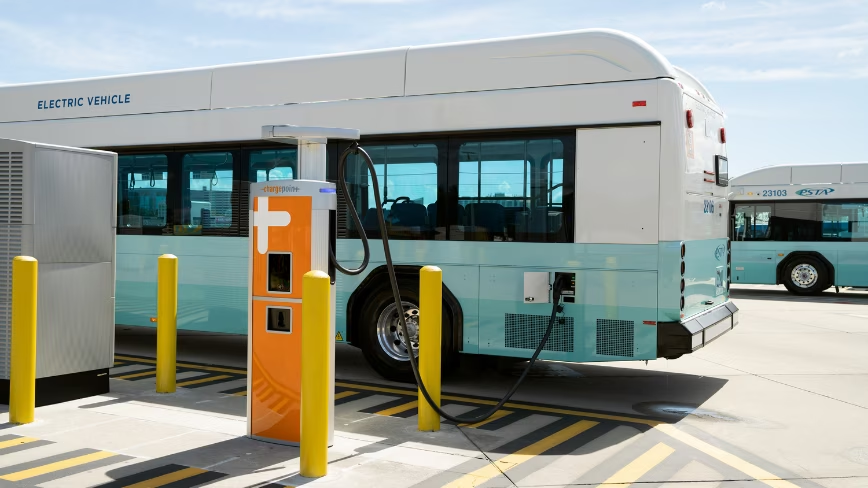
ChargePoint and Powers Parts, a national distributor of electric vehicle components and fleet replacement parts, have announced a partnership to sell ChargePoint charging hardware, software, and fleet management services directly to transit agencies ac…
The report highlights the growing problem of “systemic cooling poverty”, describes situations in which people cannot stay thermally safe because of various factors.
Big Tech, governments and investors are backing nuclear again. The harder question is whether it can scale in time for the grid.
A breakthrough innovation from Sweden could drastically reduce the CO2 emissions from steel production that stands for 7-9 % of the global emissions.
Developing fish-like nanorobots to swim and eat lithium ions in seawater was among 19 projects to win $45.7 million in U.S. government critical mineral technology grants.
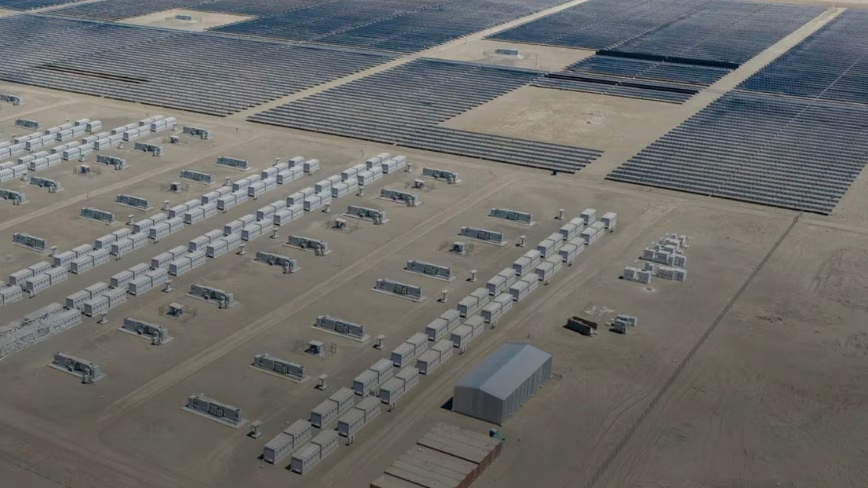
ContourGlobal, the independent power producer backed by KKR, has inaugurated a nearly $500 million solar-and-storage facility in Chile’s Atacama desert that stores daytime solar energy and delivers it after sundown. The Victor Jara hybrid plant combine…