A group of hacktivists have claimed responsibility for a distributed denial-of-service attack, which has affected several Ubuntu and Canonical websites, and prevented users from updating the Linux-based operating system.

A Brazilian tech firm that specializes in protecting networks from distributed denial-of-service (DDoS) attacks has been enabling a botnet responsible for an extended campaign of massive DDoS attacks against other network operators in Brazil, KrebsOnSecurity has learned. The firm’s chief executive says the malicious activity resulted from a security breach and was likely the work of a competitor trying to tarnish his company’s public image.
The DDoS attack against Mastodon’s flagship server comes less than a week after Bluesky was targeted with junk web traffic.
Europol coordinated an operation against for-hire distributed denial-of-service (DDoS) services, including the arrest of four people and the takedown of 53 domains.
An international law enforcement operation shut down a service called SocksEscort, which allegedly helped cybercriminals all over the world launch ransomware and DDoS attacks, as well as distribute child sexual abuse material.
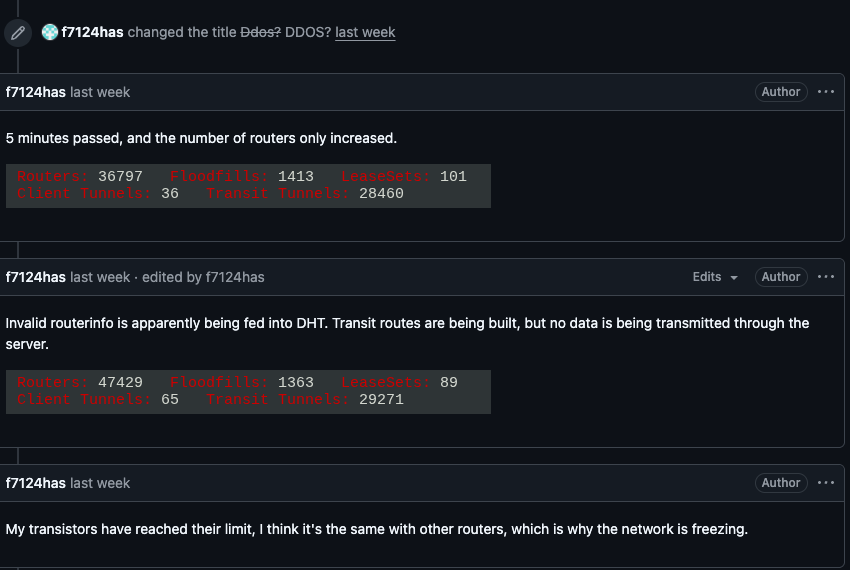
For the past week, the massive “Internet of Things” (IoT) botnet known as Kimwolf has been disrupting the The Invisible Internet Project (I2P), a decentralized, encrypted communications network designed to anonymize and secure online communications. I2P users started reporting disruptions in the network around the same time the Kimwolf botmasters began relying on it to evade takedown attempts against the botnet’s control servers.
France’s postal service, La Poste, said it was hit by a disruptive cyberattack that knocked its services offline.