
In the 1990s, astronomers confirmed the first planets orbiting stars beyond our sun. Since then, the tally has risen steadily, and last year it crossed a striking milestone: more than 6,000 known exoplanets. NASA’s Exoplanet Archive has captured not j…

The Discovery A candidate planet that might be remarkably similar to Earth, HD 137010 b, has one potentially big difference: It could be colder than perpetually frozen Mars. Key Facts Scientists continue to mine data gathered by NASA’s Kepler Space Telescope, retired in 2018, and continue to turn up surprises. A new paper reveals the […]
“We’ve often seen the ‘baby pictures’ of planets forming, but until now, the ‘teenage years’ have been a missing link.”
…
“A strong magnetic field is very important for life on a planet.”
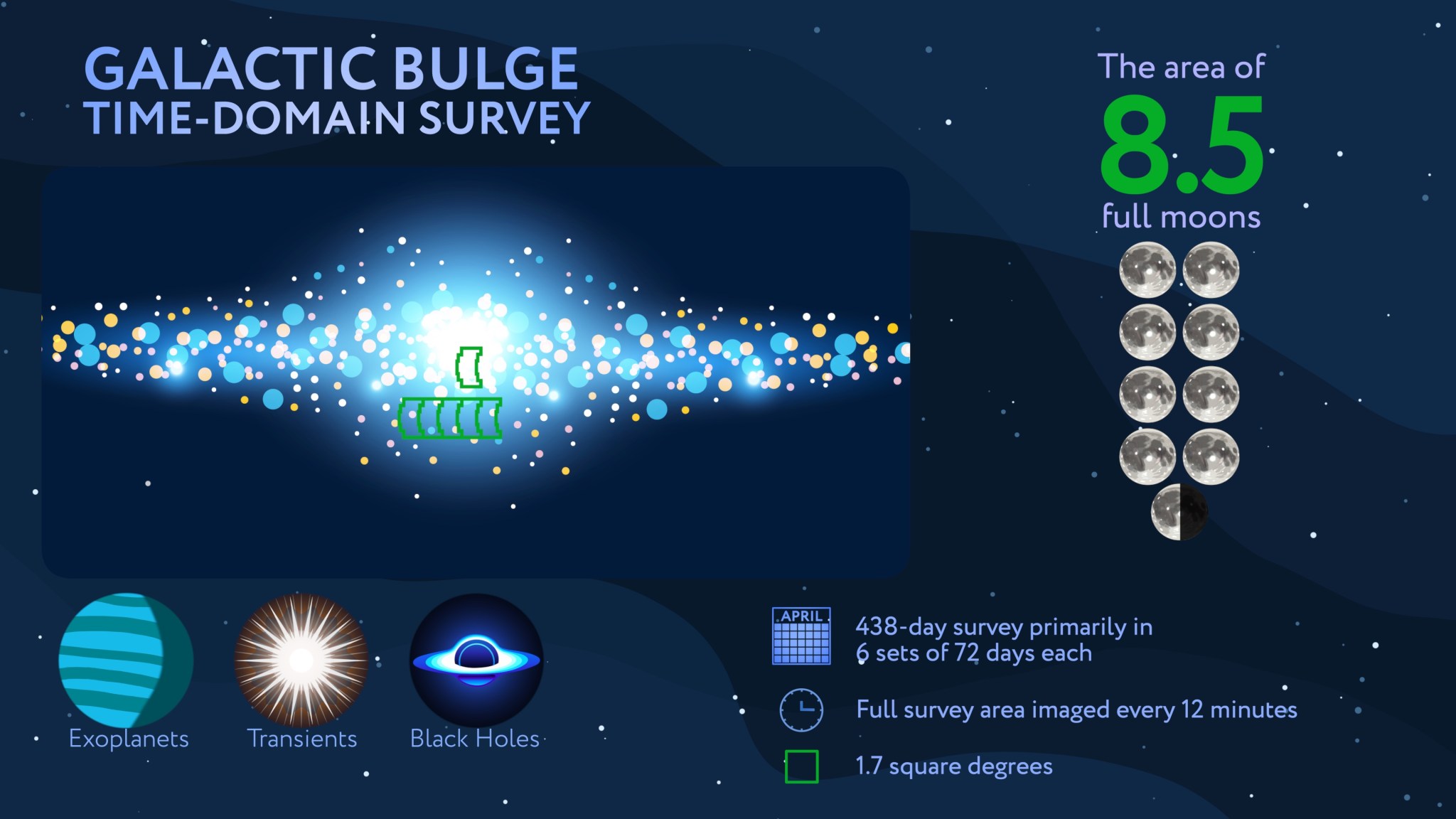
At the heart of our own galaxy, there is a dense thicket of stars with a supermassive black hole at the very center. NASA’s Nancy Grace Roman Space Telescope will provide the deepest-ever view of this zone, revealing stars, planets, and unique objects that resist definition. Based on the input of astronomers from across the […]
Jan. 23, 2026 NASA’s TESS Returns to Science Observations NASA’s TESS (Transiting Exoplanet Survey Satellite) entered safe mode Jan. 15 and returned to normal science operations Jan. 18. The operations team determined the issue arose when TESS slewed to point at a target, but its solar panels did not rotate to remain pointed at the […]

Trained on data from NASA’s exoplanet-hunting missions, the open-source ExoMiner++ deep learning model uses an advanced algorithm to validate new planets.
“In our solar system, the most massive moon is Ganymede, which is still extremely small compared to what we are inferring here.”
…
The origin of super-Earths and sub-Neptunes has been revealed in a system of four young planets that are dramatically losing their thick atmospheres.
…
Astonishingly, we can identify molecules present in the atmospheres of exoplanets.