
Authorities in the Netherlands have arrested the co-owners of two related Internet hosting companies for operating IT infrastructure used by Russia to carry out cyberattacks, influence operations and disinformation campaigns inside the European Union. The two men were the focus of a 2025 KrebsOnSecurity story about how their hosting companies had assumed control over the technical infrastructure of Stark Industries Solutions, an Internet service provider sanctioned last year by the EU as a frequent staging ground for cyber mischief from Russia’s intelligence agencies.
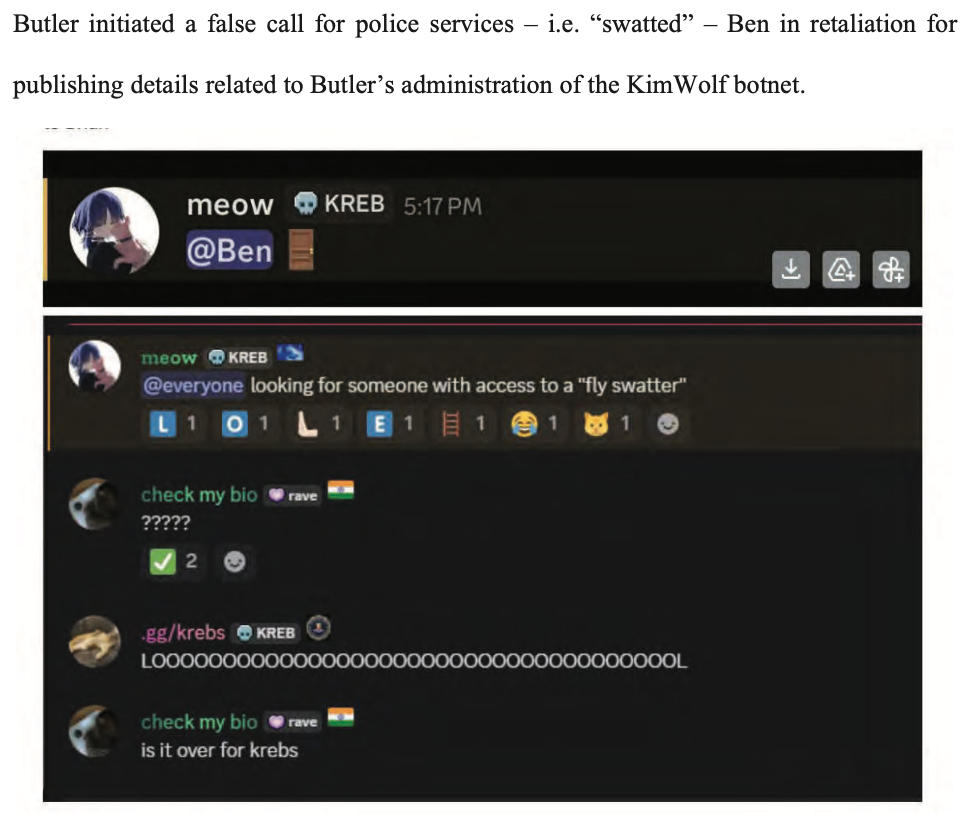
Canadian authorities on Wednesday arrested a 23-year-old Ottawa man on suspicion of building and operating Kimwolf, a fast spreading Internet-of-Things botnet that enslaved millions of devices for use in a series of massive distributed denial-of-service (DDoS) attacks over the past six months. KrebsOnSecurity publicly named the suspect in February 2026 after the accused launched a volley of DDoS, doxing and swatting campaigns against this author and a security researcher. He now faces criminal hacking charges in both Canada and the United States.
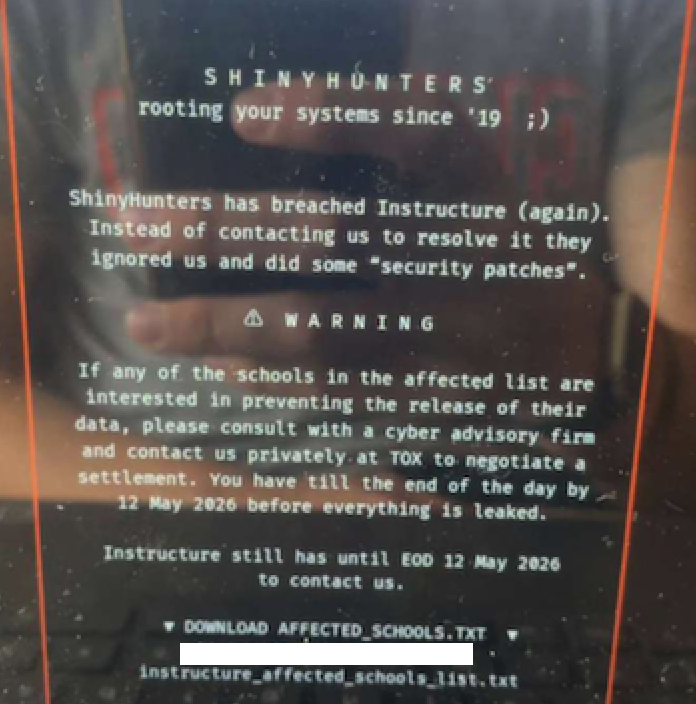
An ongoing data extortion attack targeting the widely-used education technology platform Canvas disrupted classes and coursework at school districts and universities across the United States today, after a cybercrime group defaced the service’s login page with a ransom demand that threatened to leak data from 275 million students and faculty across nearly 9,000 educational institutions.
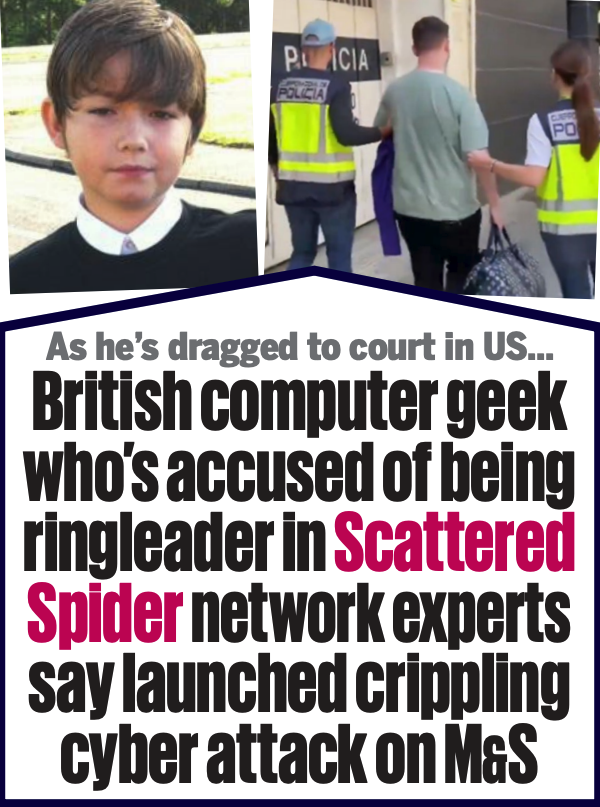
A 24-year-old British national and senior member of the cybercrime group “Scattered Spider” has pleaded guilty to wire fraud conspiracy and aggravated identity theft. Tyler Robert Buchanan admitted his role in a series of text-message phishing attacks in the summer of 2022 that allowed the group to hack into at least a dozen major technology companies and steal tens of millions of dollars worth of cryptocurrency from investors.
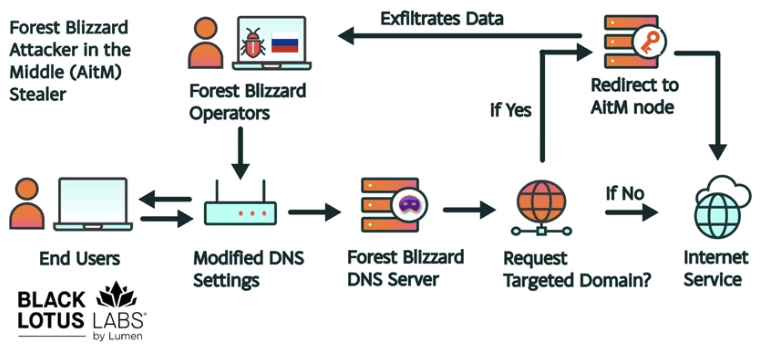
Hackers linked to Russia’s military intelligence units are using known flaws in older Internet routers to mass harvest authentication tokens from Microsoft Office users, security experts warned today. The spying campaign allowed state-backed Russian hackers to quietly siphon authentication tokens from users on more than 18,000 networks without deploying any malicious software or code.
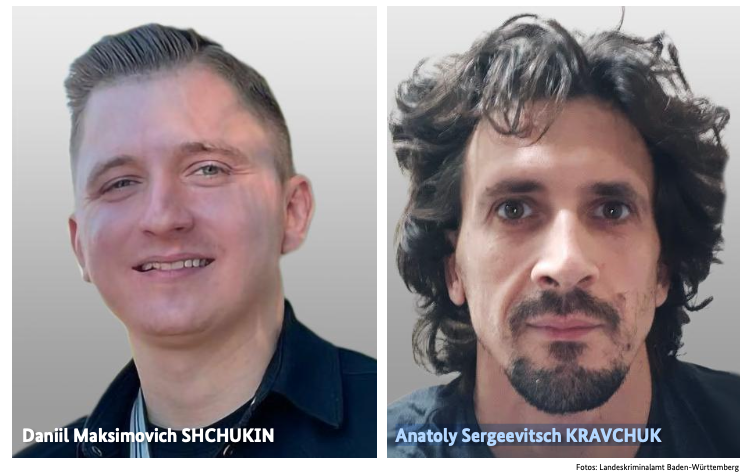
An elusive hacker who went by the handle “UNKN” and ran the early Russian ransomware groups GandCrab and REvil now has a name and a face. Authorities in Germany say 31-year-old Russian Daniil Maksimovich Shchukin headed both cybercrime gangs and helped carry out at least 130 acts of computer sabotage and extortion against victims across the country between 2019 and 2021.
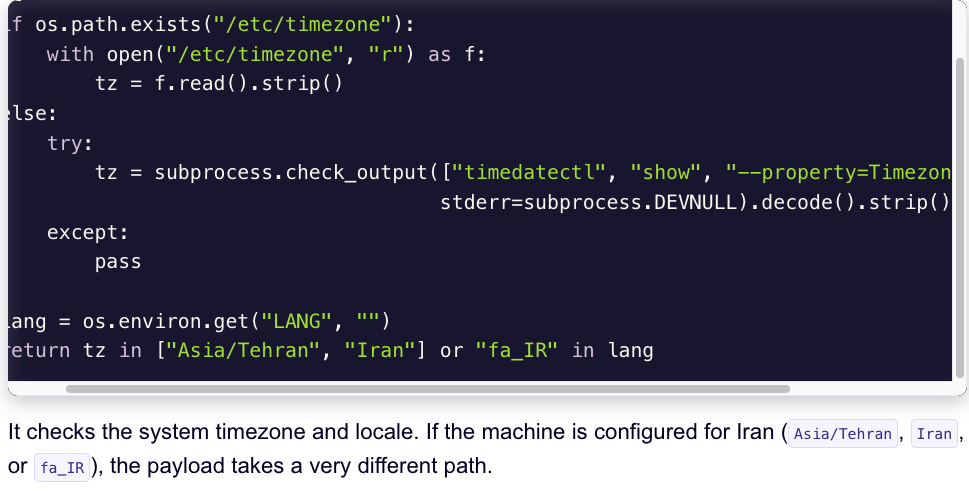
A financially motivated data theft and extortion group is attempting to inject itself into the Iran war, unleashing a worm that spreads through poorly secured cloud services and wipes data on infected systems that use Iran’s time zone or have Farsi set as the default language.

The U.S. Justice Department joined authorities in Canada and Germany in dismantling the online infrastructure behind four highly disruptive botnets that compromised more than three million hacked Internet of Things (IoT) devices, such as routers and web cameras. The feds say the four botnets — named Aisuru, Kimwolf, JackSkid and Mossad — are responsible for a series of recent record-smashing distributed denial-of-service (DDoS) attacks capable of knocking nearly any target offline.
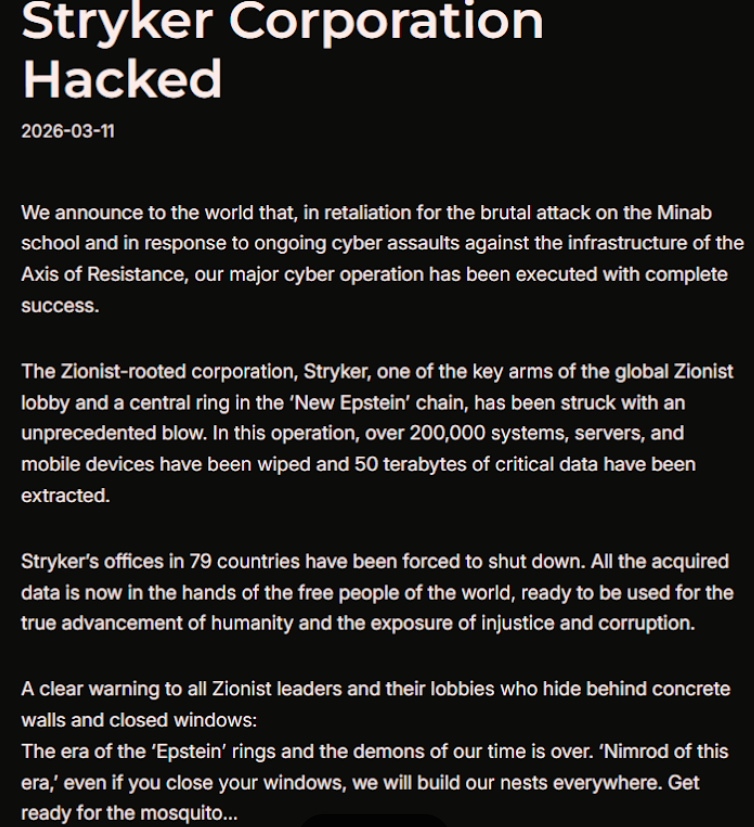
A hacktivist group with links to Iran’s intelligence agencies is claiming responsibility for a data-wiping attack against Stryker, a global medical technology company based in Michigan. News reports out of Ireland, Stryker’s largest hub outside of the United States, said the company sent home more than 5,000 workers there today. Meanwhile, a voicemail message at Stryker’s main U.S. headquarters says the company is currently experiencing a building emergency.
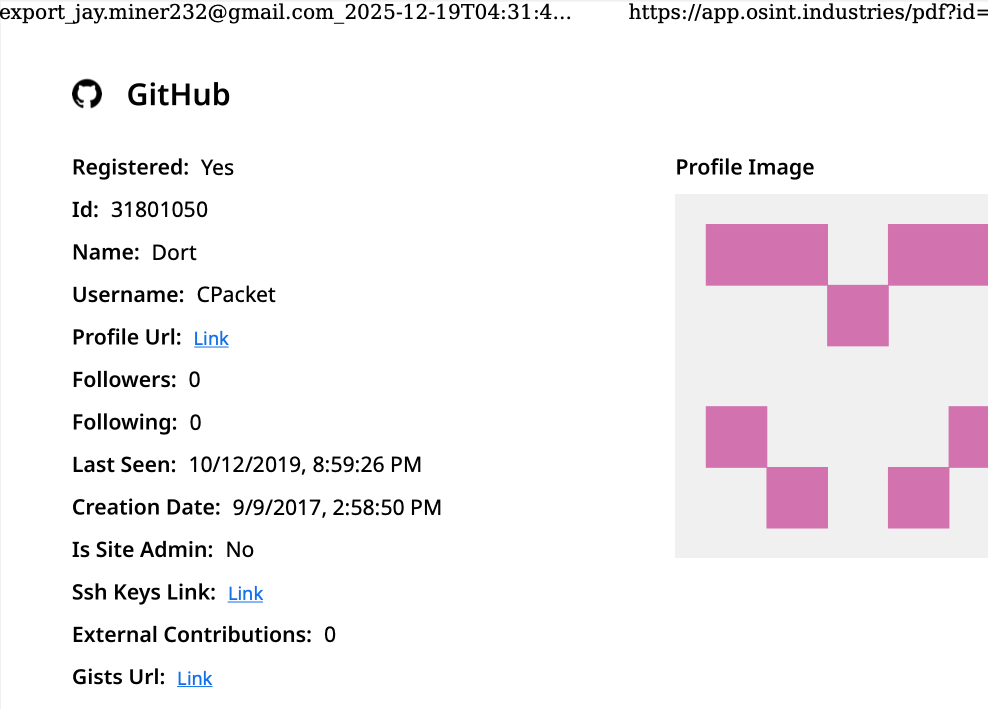
In early January 2026, KrebsOnSecurity revealed how a security researcher disclosed a vulnerability that was used to assemble Kimwolf, the world’s largest and most disruptive botnet. Since then, the person in control of Kimwolf — who goes by the handle “Dort” — has coordinated a barrage of distributed denial-of-service (DDoS), doxing and email flooding attacks against the researcher and this author, and more recently caused a SWAT team to be sent to the researcher’s home. This post examines what is knowable about Dort based on public information.