
An international team studying data from NASA’s Fermi Gamma-ray Space Telescope concludes the mission detected a rare, unusually luminous supernova. The researchers say it likely received its power-up from a supermagnetized neutron star born in the stellar collapse that triggered the explosion.

For the first time, astronomers have directly measured the speed of superheated gas billowing from a cauldron of stellar activity at the heart of M82.
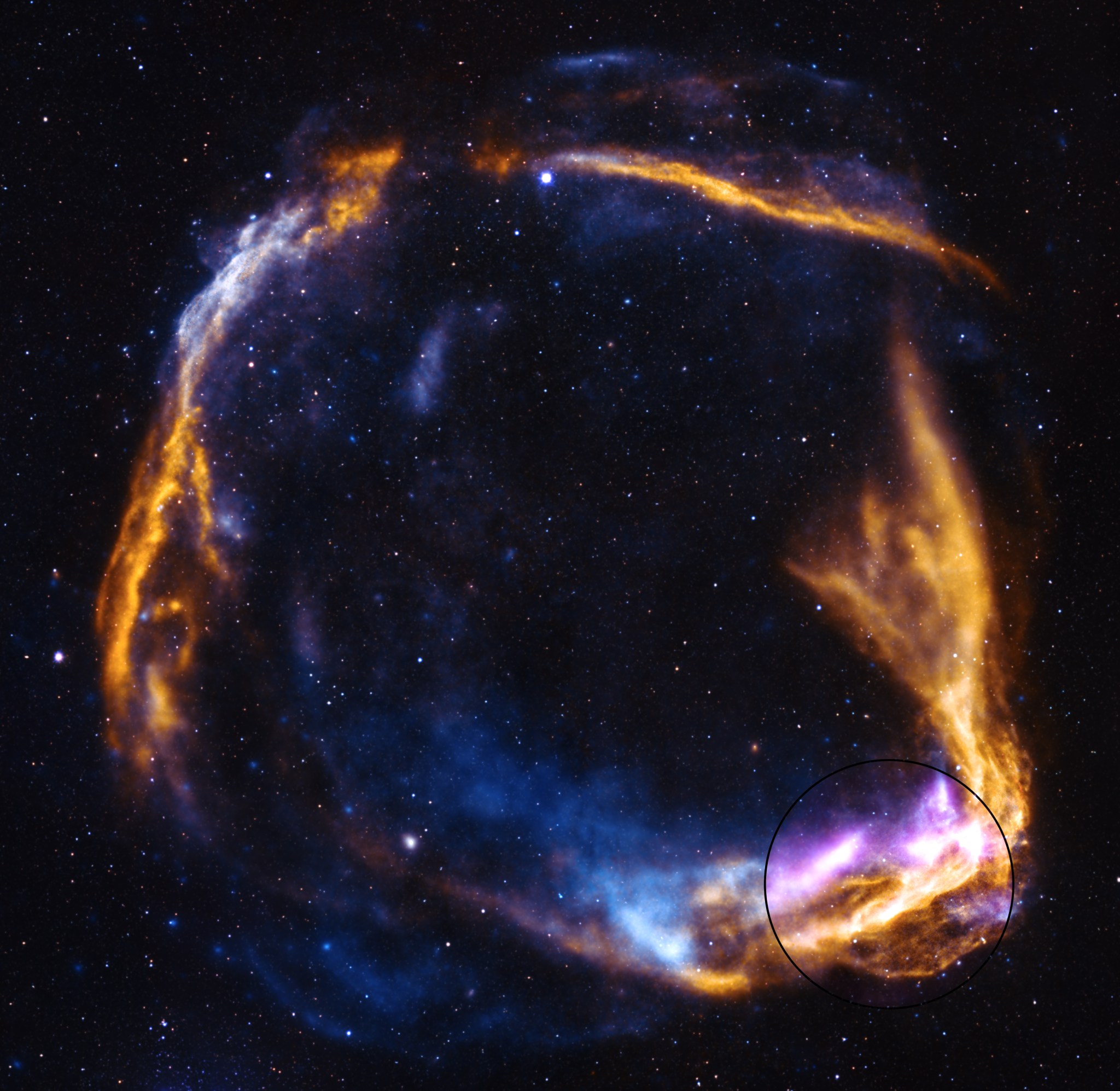
NASA’s IXPE (Imaging X-ray Polarimetry Explorer) mission has taken a new observation of a supernova, RCW 86, helping fill in a fuller picture of what other telescopes have observed. When astronomers using NASA’s Chandra X-ray Observatory previously targeted RCW 86, they discovered that a large “cavity” region around the system led the supernova to expand […]

Forty million years ago, a star in a nearby galaxy exploded, spewing material across space and generating a brilliant beacon of light. That light traveled across the cosmos, reaching Earth June 29, 2025, where it was detected by the All-Sky Automated Survey for Supernovae. Astronomers immediately turned their resources to this new supernova, designated 2025pht, […]