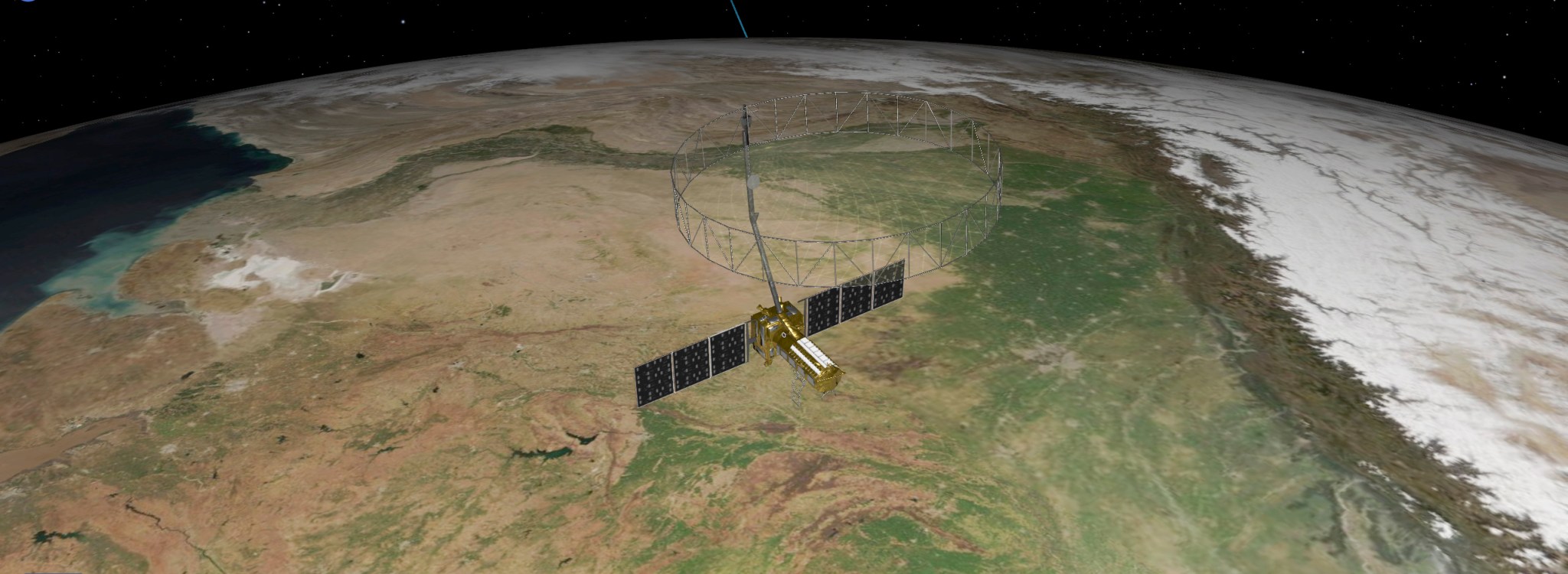
Rapid advances in commercial space, artificial intelligence, and edge computing are transforming what is possible for Earth observation. By pushing more intelligence onboard, missions can move from passively collecting data to actively interpreting and responding to changing surface conditions in near-real time, enabling more targeted observations and dramatically improving the value of data returned to […]

NASA’s Center of Excellence for Collaborative Innovation (CoECI) assists in the use of crowdsourcing across the federal government. CoECI’s NASA Tournament Lab offers the contract capability to run external crowdsourced challenges on behalf of NASA and other agencies. The Office of Dietary Supplements (ODS) at the National Institutes of Health (NIH) announces the “Supplements, Facts First: […]

NASA is getting ready to send four astronauts around the Moon with Artemis II, laying the foundation for sustainable missions to the lunar surface and paving the way for human exploration on Mars. As the agency considers deep space endeavors that could last months or years, it must develop ways to feed astronauts beyond sending […]

NASA has identified a list of 32 technology shortfalls and invites you to give input on your critical technology needs using this feedback mechanism. Whether you’re part of the space technology community or an interested member of the public, your input is invaluable. By registering and providing your feedback, you could help inform of national space technology priorities. […]
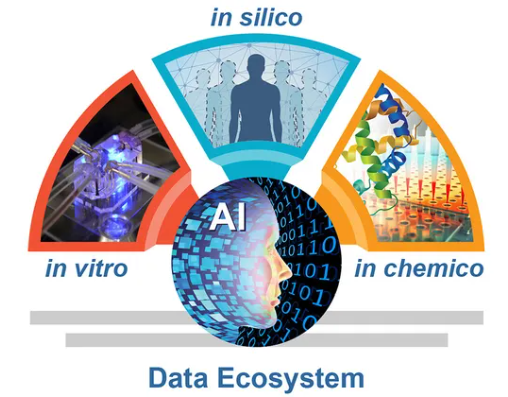
Recent technological advances have set the stage for a renewed focus on human-based solutions called new approach methodologies (NAMs) that can complement, and in some cases replace, animal models in research and regulatory testing. These NAMs generally span advanced cell-tissue-organoid (in vitro), computational modeling (in silico), and cell-free biochemical analysis (in chemico) techniques, with each […]