NASA’s Juno spacecraft captured a photo of Jupiter’s moon Thebe.
Lightning on Jupiter may pack more than 100 times the power of Earth’s bolts, and may prove one million times stronger, a new study finds.
…
Never-before-seen temperature and ion density measurements reveal that the effect of Jupiter’s moons on its aurora are more complicated than scientists thought.
…
Ganymede’s auroras splinter into small, bright patches — structures that mirror features seen in Earth’s own auroral displays.
…
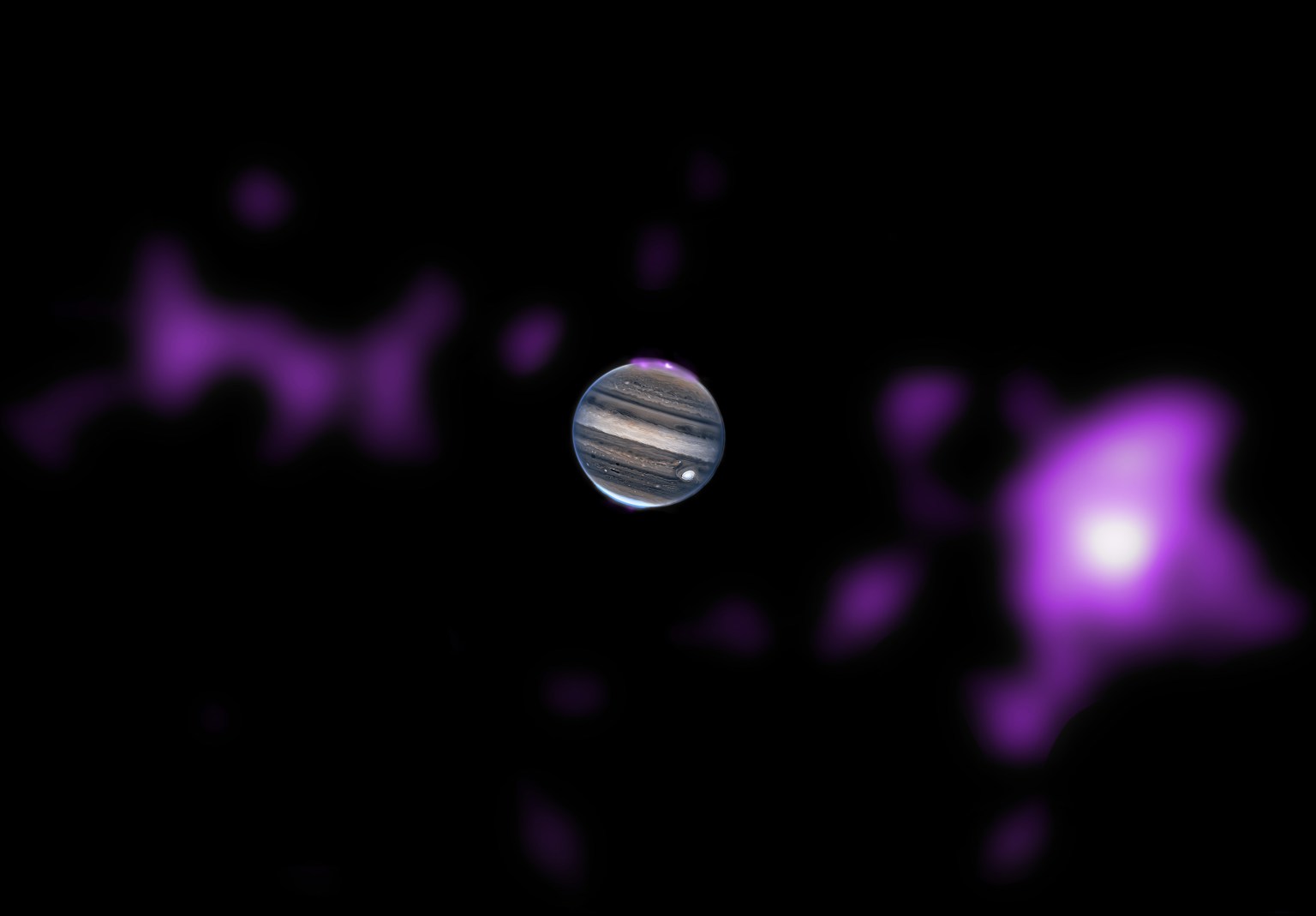
In late February, people in the Northern Hemisphere can look up for a special sight : Six planets will all be visible from clear and dark night skies. New sonifications from NASA’s Chandra X-ray Observatory released [day of week] will help commemorate this latest “planetary parade.” Because the planets in our solar system travel around […]
Jupiter may be a bit more petite than expected, and that could have a big impact on how scientists model the mysterious interior of the giant planet.
…
“What makes the event even more extraordinary is that it did not involve a single volcano, but multiple active sources.”
…
Using data gathered by NASA’s Juno Jupiter orbiter, scientists estimate that Europa’s ice shell is about 18 miles thick — which could make it hard for nutrients to get down to its buried ocean.
…
“Most excitingly, this new idea addresses one of the longstanding habitability problems on Europa and is a good sign for the prospects of extraterrestrial life in its ocean.”
…
Jupiter harbors more oxygen than the sun, a new study finds, giving astronomers a crucial clue about how our solar system’s planets formed.
…