The 12,060-piece Lego set of architect Antoni Gaudí’s Barcelona masterpiece, the Sagrada Familia, is now available for preorder.
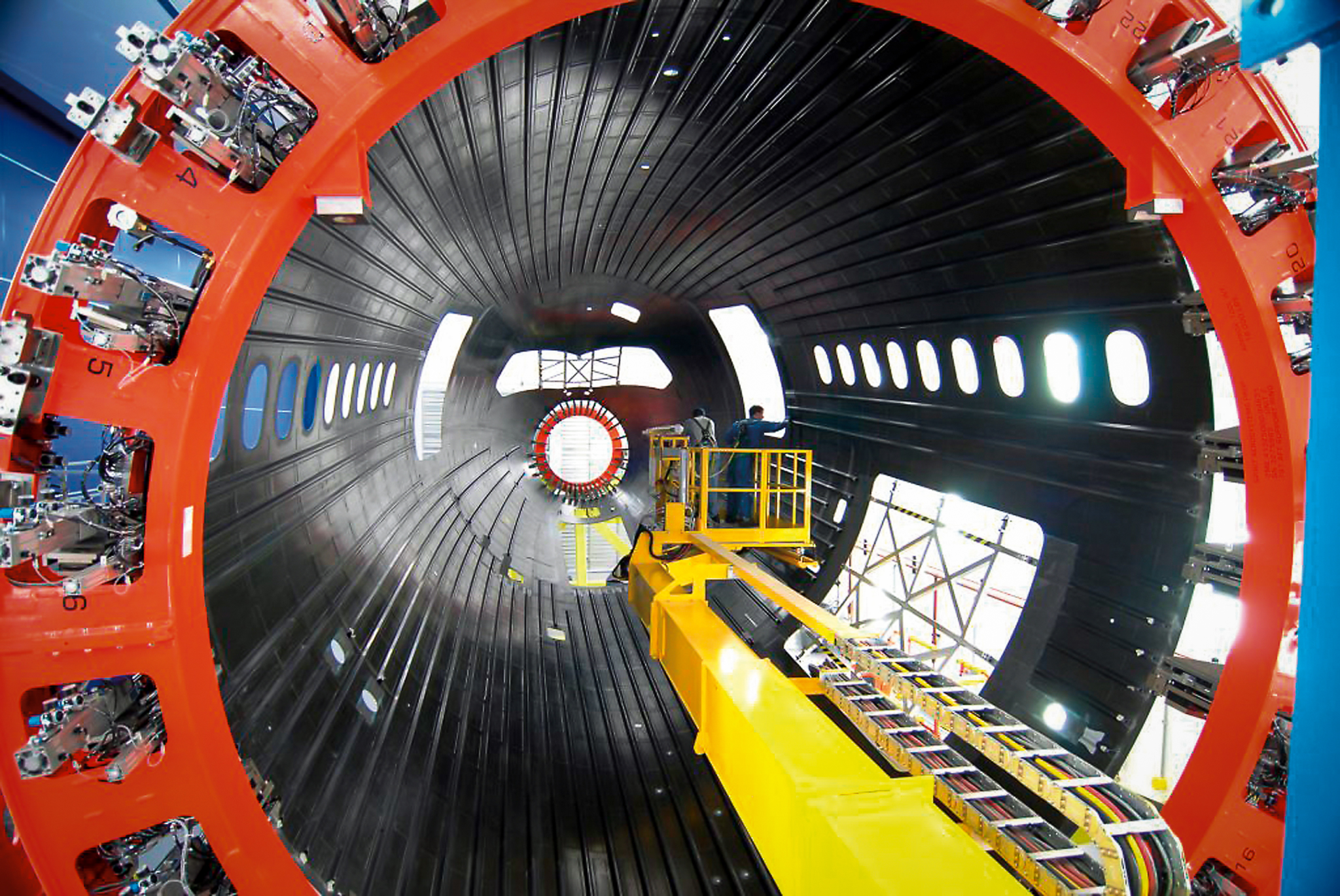
NASA’s Hi-Rate Composite Aircraft Manufacturing (HiCAM) project brought together its full team of Advanced Composites Consortium partners for a 2026 spring review at NASA’s Langley Research Center in Hampton, Virginia. The meeting took place May 5-7, bringing together about 150 people from the consortium, a 22-member public-private partnership. The review gave NASA and industry partners a chance to look at recent progress and […]
The new design is one of multiple new Cash App Tags on the way.
Anthropic co-founder and CEO Dario Amodei said it was coming, but it still feels like a milestone: More than 80% of the code merged into Anthropic’s production codebase in May wasn’t authored by humans, but by its own AI model, Claude, according to a new report shared by the record-breaking AI startup today.
This transformation has triggered an 8x increase in the volume of code shipped per engineer per quarter compared to the company’s 2021–2025 baseline, which the company notes means even more code someone or something must review.
For enterprise technical leaders, this is no longer a localized research curiosity; it’s a new, aggressive competitive baseline.
If a frontier AI laboratory can successfully offload the vast majority of its engineering output to autonomous agents — showing signs of the long-sought AI Holy Grail of “recursive self-improvement,” models that can independently research and upgrade themselves — what’s preventing enterprises across other sectors from automating more of their internal software development with AI agents, too?
Obviously, it’s easier said than done. Anthropic is one of the principle creators of the current gen AI boom, so you’d expect them to know how to deploy the technology effectively.
But for other enterprises looking to bump up the amount of code and workflows handled by agents, Anthropic’s new blog post details the outlines of a general plan they too can adopt to re-engineer their operations and workflows to take advantage of the latest AI advances.
Anthropic’s roadmap that other enterprises can follow
The transition from human-centric coding to autonomous orchestration requires understanding the evolution of AI capabilities. Anthropic outlines a clear historical continuum that enterprises can map onto their own digital transformation roadmaps:
-
2021–2023 (Manual Writing): Engineers write code and documentation natively within local text editors.
-
2023–2025 (Chatbot Assistance): Developers use early models to generate brief code snippets, copying and pasting outputs manually into their environments.
-
2025–2026 (Coding Agents): Capable agents actively write and edit entire files autonomously.
-
Present Day (Autonomous Agents): Agents execute code independently, debug live environments, and delegate multi-hour work streams to specialized sub-agents.
This rapid evolution is validated by external benchmarks. Software engineering evaluation frameworks like SWE-bench—which tasks models with resolving real bug reports in complex, open-source codebases—have saturated over a two-year window.
Furthermore, long-duration capability evaluations demonstrate that models like Claude Opus 4.6 can reliably sustain operations on 12-hour tasks, while Claude Mythos Preview pushes past 16 hours of continuous problem-solving.
Internally, the technological leap is even more stark. On highly complex, open-ended engineering problems where clear specifications are initially absent, Claude’s success rate climbed to 76% in May 2026 — a 50-point increase in a six-month window.
In isolated optimization benchmarks, where models are tasked with accelerating AI model training code, Anthropic’s internal Mythos Preview model achieved a 52x speedup.
For comparison, a skilled human developer typically requires four to eight hours of manual refactoring to achieve a mere 4x speedup on the exact same codebase.
3-step plan to more complete production code automation
For an enterprise to replicate Anthropic’s 80 percent milestone, technical decision-makers must abandon the “developer assistant” mental model and transition to an “automated factory” architecture. This shift impacts product management, operations, and developer workflows in three distinct ways:
1. Shift from Code Execution to Architectural Oversight
When code generation costs near zero in human time, the primary engineering role shifts from writing software to specifying goals and reviewing outputs. Enterprise leaders must retrain developers to act as systems architects and judges. As one Anthropic employee noted regarding the operational reality of this shift:
“The shape of stuff today is roughly ‘humans have ideas, and the models are able to implement, test and evaluate them an [order of magnitude] faster than before.’”
2. Overcome The Code Review Bottleneck
Injecting vast quantities of AI-generated code into an organization inevitably creates operational friction.
According to Amdahl’s law, the speedup of any process is strictly limited by its serial, non-automated bottlenecks.
At Anthropic, flooding the system with synthetic code instantly turned human code review into a critical bottleneck.
To counter this, enterprise teams must deploy automated AI code reviewers directly into their Continuous Integration/Continuous Deployment (CI/CD) pipelines.
Anthropic implemented an automated Claude reviewer (a publicly accessible version, Claude Code Review rolled out for commercial usage in March) tasked with analyzing every pull request for architectural defects, security flaws, and regression bugs before merging. Other dedicated firms like Qodo offer tools tailor-made for this purpose, as well.
In Anthropic’s case, retrospective analyses indicated that the automated layer caught approximately one-third of the production bugs responsible for historical outages on the flagship claude.ai website.
3. Target High-Volume Operational Debt
Enterprises are frequently paralyzed by legacy code maintenance and long-deferred technical debt. Rather than deploying agents to write speculative new features, technical leaders should direct autonomous agents toward closed-loop, painstaking cleanup operations.
In April 2026, an Anthropic engineer deployed Claude to resolve a persistent class of API errors. Operating autonomously, the model shipped more than 800 individual fixes, successfully reducing the error rate by a factor of 1,000.
The supervising engineer estimated that a human developer would have spent four full years executing the same work, due to the cognitive load of holding massive, unfamiliar code context in their head simultaneously.
Considerations for enterprises moving forward in an age of primarily AI-generated code
Operating a codebase predominantly authored by AI introduces unique governance challenges that enterprise legal and security teams must navigate.
Unlike open-source licensing models (such as the permissive MIT license or copyleft GPL frameworks), enterprise codebases utilizing proprietary LLM infrastructure remain subject to the commercial terms of service of the respective AI vendor.
The deployment of autonomous agents requires rigorous verification protocols to ensure compliance, security, and intellectual property protection:
-
Code Quality and Maintenance: Anthropic’s internal data indicates that while AI-authored code was objectively lower in quality than human output in late 2025, it reached rough parity by mid-2026, with expectations to surpass human standards within the year. Enterprise governance must adapt to a reality where the baseline quality of automated output is structurally superior to average manual coding.
-
Security Auditing at Scale: The sheer volume of automated code creation demands automated vulnerability discovery. Anthropic’s Project Glasswing illustrates the scale of this issue: utilizing Mythos Preview, the project identified more than 10,000 high- and critical-severity software vulnerabilities across global digital infrastructure within its first few weeks. This shifted the enterprise cybersecurity challenge entirely from vulnerability discovery to patch deployment velocity.
-
The Risk of Alignment Cascades: Technical leaders must maintain strict verification gates. If an enterprise uses an AI system to continuously modify, maintain, and expand its proprietary software infrastructure, undetected errors or subtle misalignments can compound over successive agent sessions, gradually corrupting system integrity or introducing security exploits that escape human notice.
Brace for internal enterprise culture disruption
The transition to an AI-dominated codebase is altering the cultural dynamics of engineering teams, introducing both unprecedented efficiency and deep psychological friction.
Publicly, Anthropic framed these metrics as a harbinger of a broader transformation. In an official statement on X, the company observed:
“Our internal data shows Claude is accelerating AI development—a possible path to recursive self-improvement, or AI autonomously building a more capable successor. It’s happening faster than we thought, and the implications deserve greater attention.”
They expanded on the immediate productivity implications shortly thereafter:
“Today, Anthropic engineers on average ship 8x as much code per quarter as they did compared to 2021-2025… Many engineers also say Claude’s code quality is now on par with human code; we expect it to be better within the year.”
Behind these corporate metrics lies a complex human reality. Internal employee communications reveal a distinct erosion of traditional workplace collaboration, as peer-to-peer developer interaction is systematically replaced by asynchronous agent calls:
“Work (and life) ran on a gift economy of small favors between humans. ‘Can you help me get this script running?’ […] each one created a little debt, a little mutual awareness. Claude has eaten the favors. It’s faster, it creates zero debt, but each of these is a lost bid for human collaboration.”
For individual contributors, the total automation of their primary skill set introduces acute professional anxiety regarding relevance and systemic control:
“I started leaning hard into Claudifying about a year ago. That’s been a crazy adventure and it’s now been ~5 months since I last wrote any code myself.”
“On days where everything works well, I can’t help but think nothing I do matters, everything is automated and better and faster than I ever will be. But then there are days where everything breaks and I don’t understand why and I realize I have no idea what I’ve been up to anymore.”
Enterprise leaders aiming to match Anthropic’s technical velocity cannot afford to ignore these psychological dynamics.
Achieving an 80 percent automated codebase requires more than purchasing API tokens or configuring agent loops; it demands a total cultural overhaul, a strategy for mitigating developer obsolescence anxiety, and the implementation of rigorous, automated verification guardrails to maintain ultimate human control over the software stack.
American models are simply too expensive – US firms are now turning to DeepSeek for cheaper costs and portability.
…
Find out how Google Gemini can adapt to your learning style with personalized analogies, simplified explanations, and daily quizzes to make any topic easier to understand.
…
A new attack technique affects HTTP/2 configurations of major web servers, but some have released patches already.
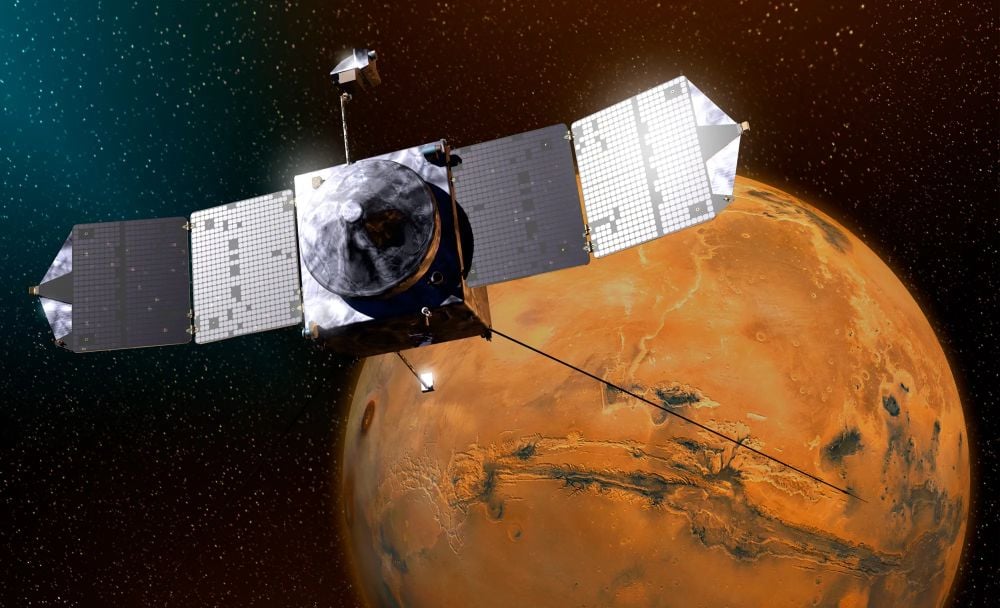
New research shows how unmagnetized worlds like Mars can still deflect some of the Sun’s solar wind. Unlike magnetospheres that form around planet’s like Earth, this effect takes place in Mars’ ionosphere. It’s called the Zwan-Wolf effect, and it’s not…

DIYer and TikTok user Annike Tan, who goes by @ubeboobey, can carry her cyberdeck around without anyone noticing because it doesn’t look like a computer at all. Tan, who has been featured in The Cut and Wired, went viral earlier this year with a mermaid-themed cyberdeck she made inside an old purse. She has since […]
Here are hints and the answer for today’s Wordle for June 5, No. 1,812.