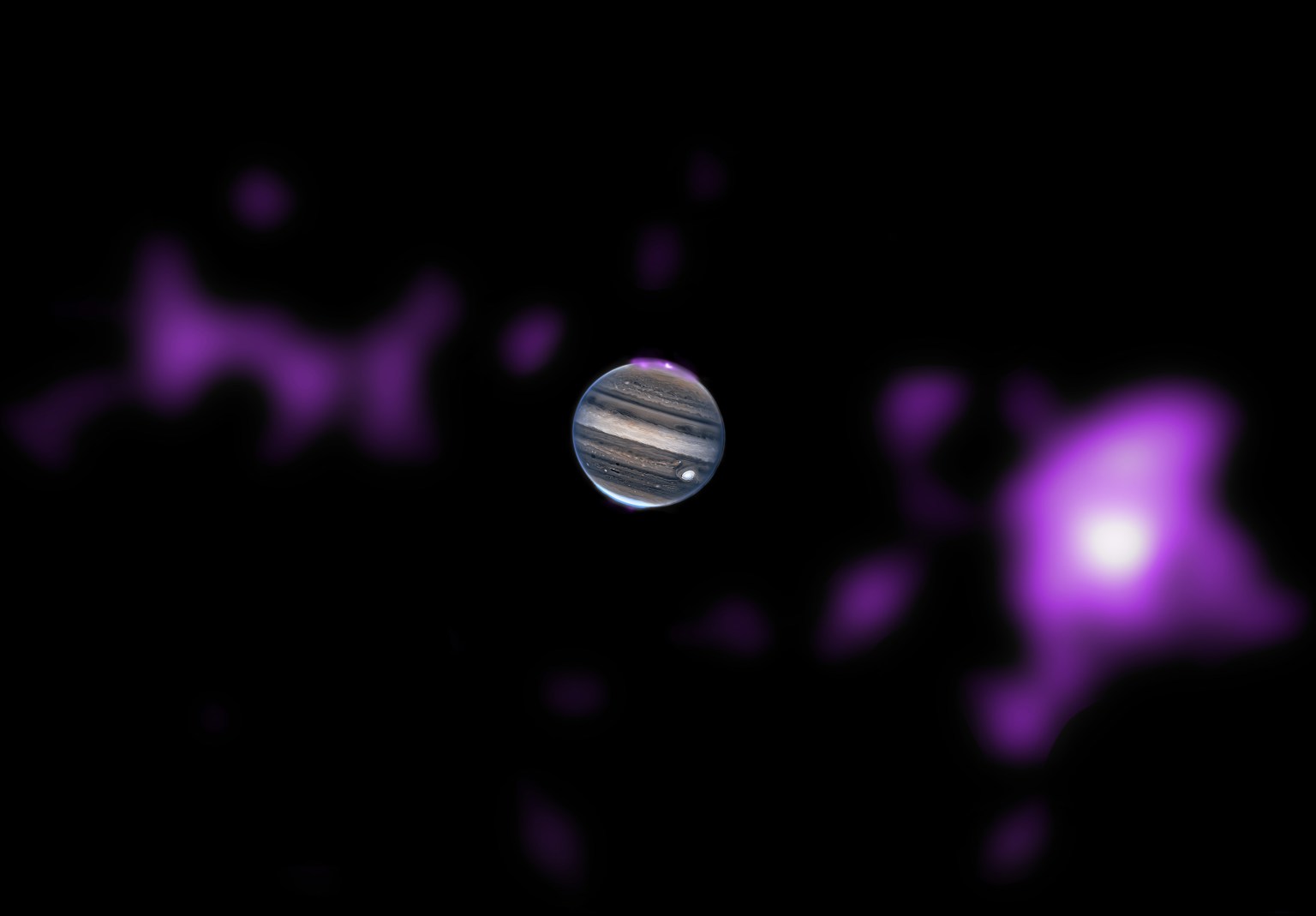
In late February, people in the Northern Hemisphere can look up for a special sight : Six planets will all be visible from clear and dark night skies. New sonifications from NASA’s Chandra X-ray Observatory released [day of week] will help commemorate this latest “planetary parade.” Because the planets in our solar system travel around […]

Two heads are better than one in the latest images from NASA’s James Webb Space Telescope, which reveal new detail in a mysterious, little-studied nebula surrounding a dying star. Nebula PMR 1 is a cloud of gas and dust that bears an uncanny resemblance to a brain in a transparent skull, inspiring its nickname, the […]
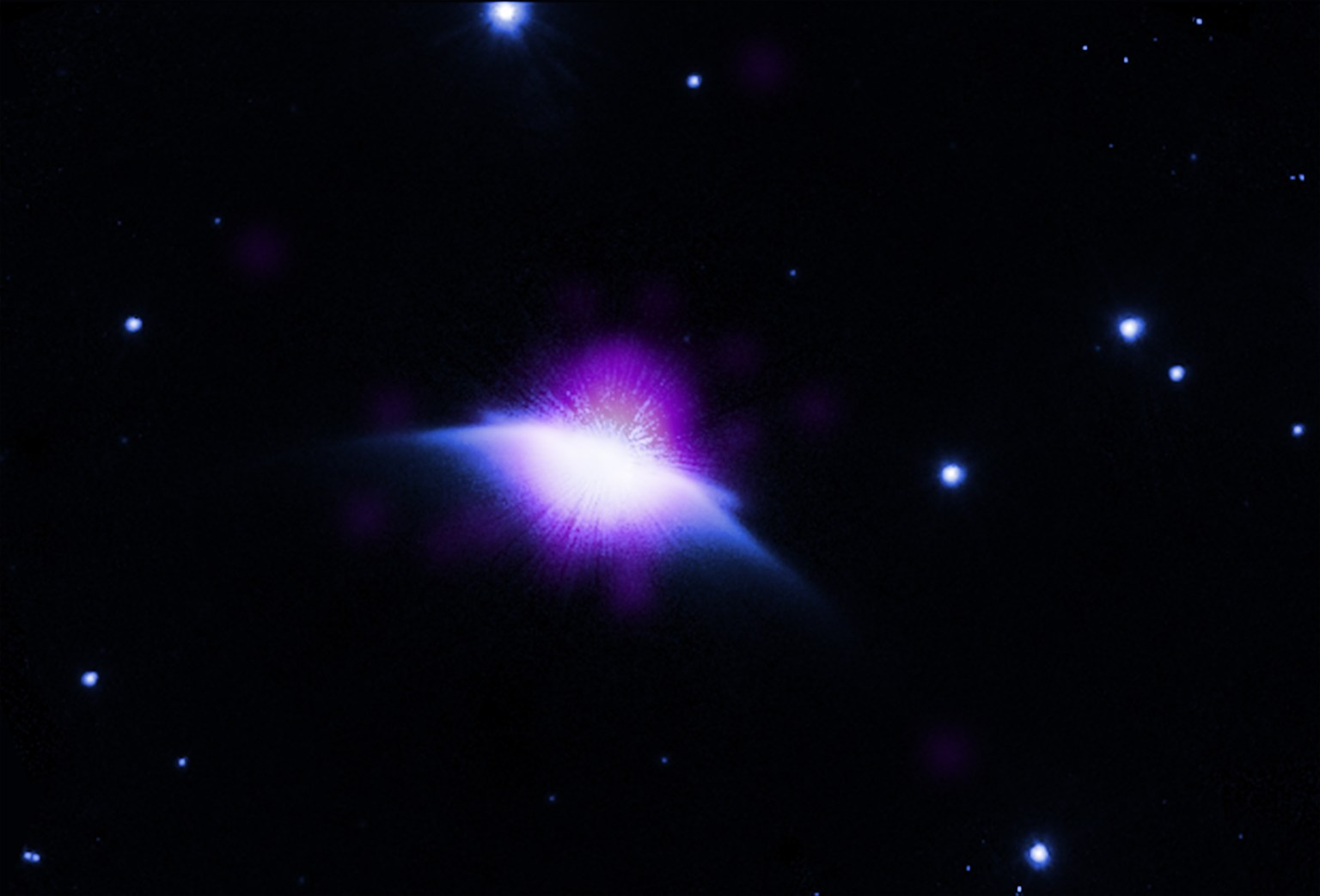
For the first time, a much younger version of the Sun has been caught red-handed blowing bubbles in the galaxy, by astronomers using NASA’s Chandra X-ray Observatory. The bubble – called an “astrosphere” – completely surrounds the juvenile star. Winds from the star’s surface are blowing up the bubble and filling it with hot gas […]

Forty million years ago, a star in a nearby galaxy exploded, spewing material across space and generating a brilliant beacon of light. That light traveled across the cosmos, reaching Earth June 29, 2025, where it was detected by the All-Sky Automated Survey for Supernovae. Astronomers immediately turned their resources to this new supernova, designated 2025pht, […]

In the vast tapestry of the universe, most galaxies shine brightly across cosmic time and space. Yet a rare class of galaxies remains nearly invisible — low-surface-brightness galaxies dominated by dark matter and containing only a sparse scattering of faint stars. One such elusive object, dubbed CDG-2, may be among the most heavily dark matter-dominated […]

This stunning image from NASA’s Hubble Space Telescope reveals a dramatic interplay of light and shadow in the Egg Nebula, sculpted by freshly ejected stardust. Located approximately 1,000 light-years away in the constellation Cygnus, the Egg Nebula features a central star obscured by a dense cloud of dust — like a “yolk” nestled within a […]

This NASA/ESA Hubble Space Telescope image features an uncommon galaxy with a striking appearance. NGC 7722 is a lenticular galaxy located about 187 million light-years away in the constellation Pegasus. A lenticular, meaning “lens-shaped,” galaxy is a type whose classification sits between more familiar spiral galaxies and elliptical galaxies. It is also less common than spirals and ellipticals — partly because […]

New simulations performed on a NASA supercomputer are providing scientists with the most comprehensive look yet into the maelstrom of interacting magnetic structures around city-sized neutron stars in the moments before they crash. The team identified potential signals emitted during the stars’ final moments that may be detectable by future observatories. “Just before neutron […]
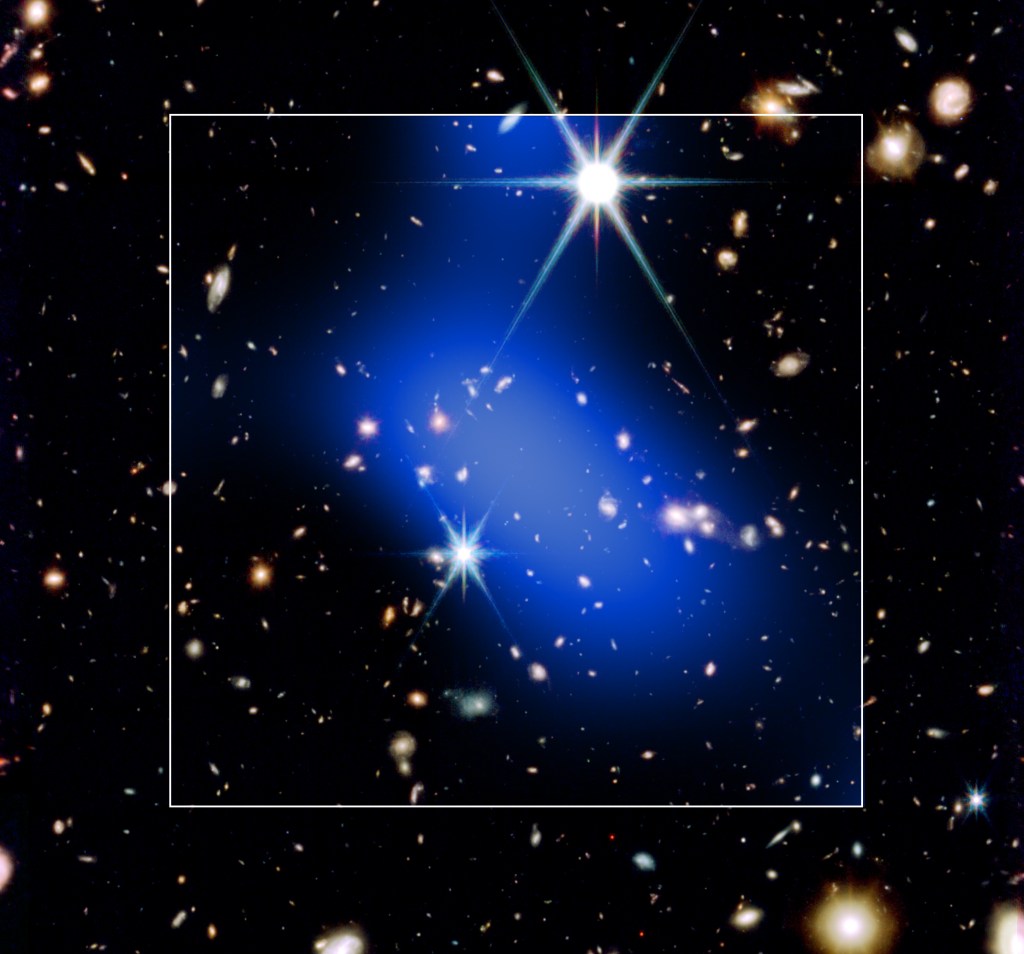
A new discovery captures the cosmic moment when a galaxy cluster – among the largest structures in the universe – started to assemble only about a billion years after the big bang, one or two billion years earlier than previously thought. This result, made using NASA’s Chandra X-ray Observatory and James Webb Space Telescope, will […]

NASA’s James Webb Space Telescope has topped itself once again, delivering on its promise to push the boundaries of the observable universe closer to cosmic dawn with the confirmation of a bright galaxy that existed 280 million years after the big bang. By now Webb has established that it will eventually surpass virtually every benchmark […]