A new study suggests the Milky Way consumed an ancient dwarf galaxy billions of years ago, and its stellar remains may still be embedded within ours.
Astronomers call this “eruptive mass loss,” and it’s a stellar drama we’re still trying to fully grasp.
Astronomers have found the boundary of star formation in the Milky Way’s spiral disk — and it’s not as far out from the center of our galaxy as you might imagine.
…
By peering deep inside Orion’s star-forming gas clouds, radio astronomers have been able to directly measure the masses of young binary stars, confirming that our theoretical models are on the right lines.
…
A new study suggests that most “post-starburst galaxies” cease star formation because they run out of fuel. But that’s not the full story.
…
NASA’s SPHEREx space telescope reveals widespread water ice in Cygnus X, showing how dust shields molecules in star-forming regions across the Milky Way.
…
The James Webb Space Telescope captured the first detailed images of planetary nebula Tc 1, revealing new details of what happens after a sun-like star dies.
…
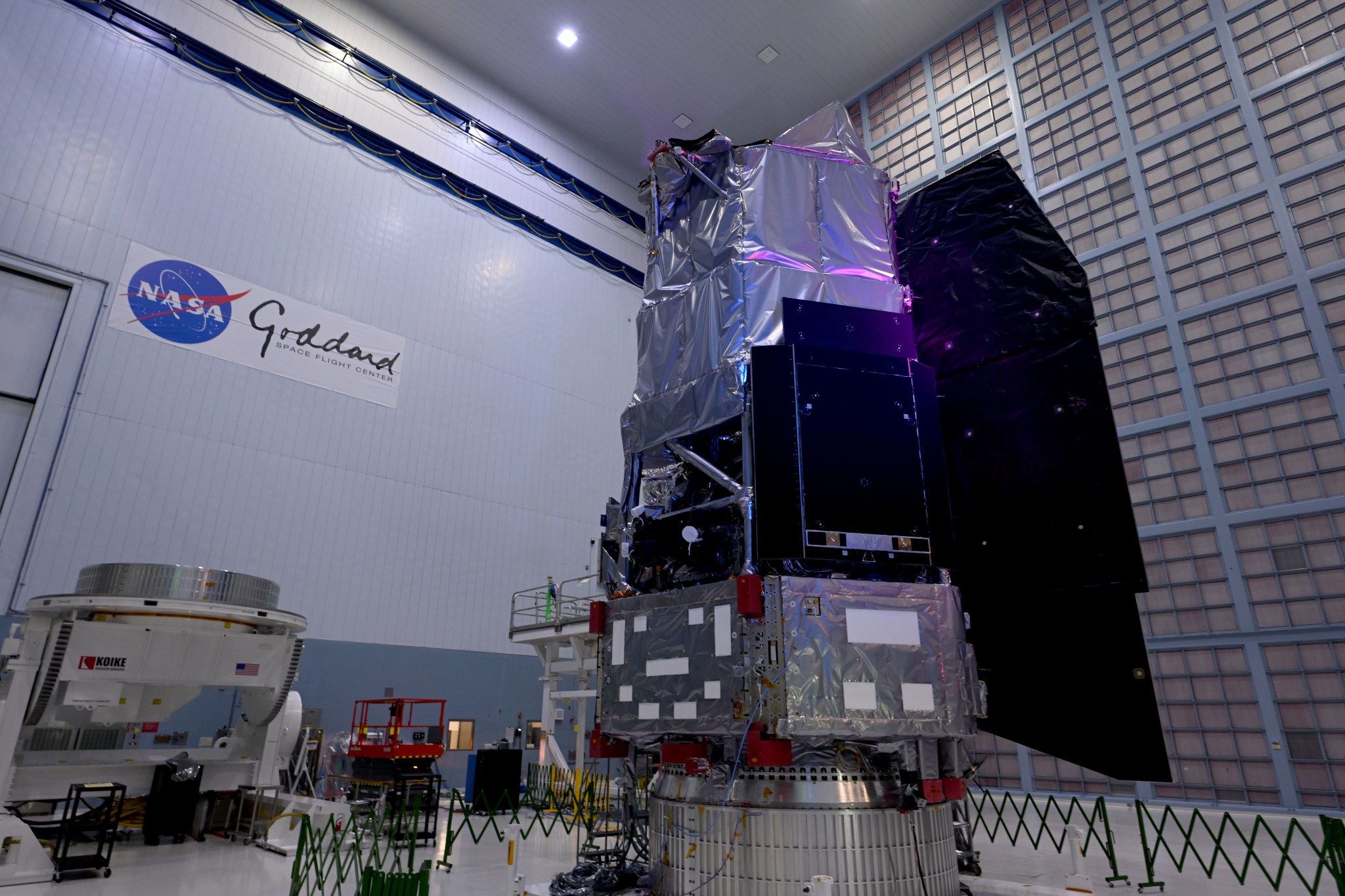
NASA’s Nancy Grace Roman Space Telescope team now is targeting as soon as early September 2026 for launch, ahead of the agency’s commitment to flight no later than May 2027. “Roman’s accelerated development is a true success story of what we can achieve when public investment, institutional expertise, and private enterprise come together to take […]

This shimmering region of star-formation, a close-up of the Trifid Nebula about 5,000 light-years from Earth, was captured in intricate detail by NASA’s Hubble Space Telescope. The colors in Hubble’s visible light image, which marks the 36th anniversary of the mission’s launch on April 24, are reminiscent of an underwater scene filled with fine-grained sediments […]
The star is escaping the Large Magellanic Cloud for the Milky Way.